Home / Hood cleaning
Commercial kitchen hood cleaning
NFPA 96 cleaning from the hood to the rooftop fan, scheduled after you close, across DC, Northern Virginia and Maryland.
- Scheduled after you close
- Before and after photos
- Certificate for your fire marshal and insurer
We clean the whole system, hood to fan
Grease left in the duct or the fan can still catch fire, so every cleaning covers each part NFPA 96 calls for.
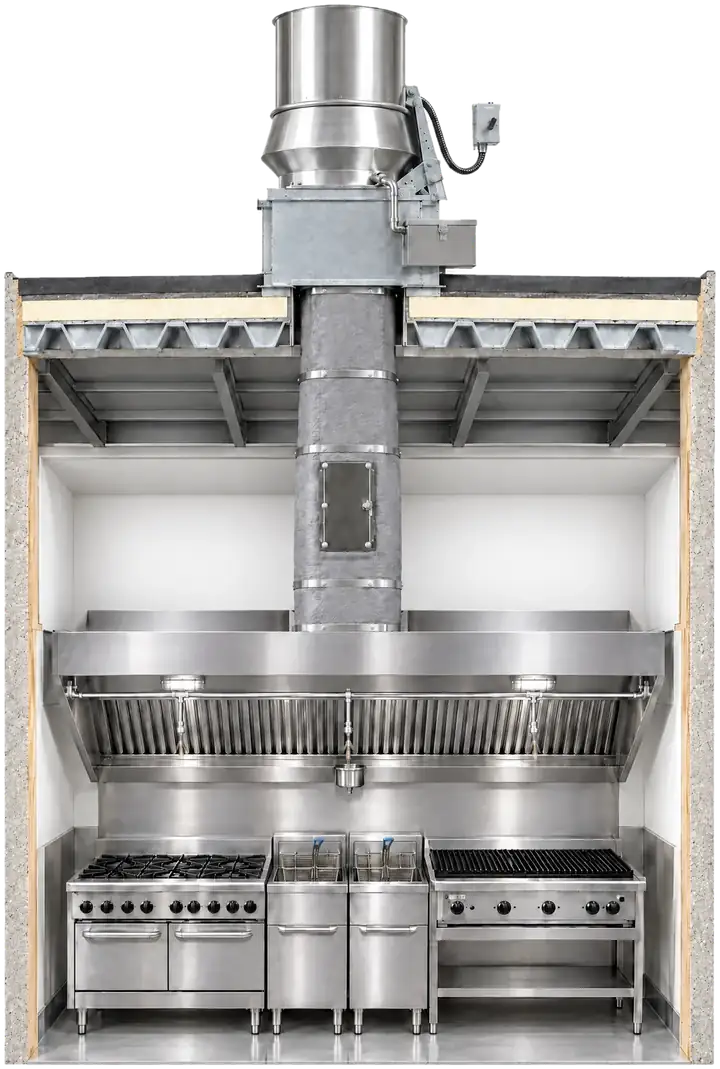
Hood
Canopy, plenum and grease troughs degreased and wiped down.
Baffle filters
Pulled, degreased and put back in place.
Grease duct
Scraped and washed to bare metal through the existing access doors.
Upblast fan
Blades, housing and curb cleaned on the roof.
Grease box
Emptied and cleaned so grease stays off your roof.
Anything we can't reach is noted in your report.
How often your hood needs cleaning
NFPA 96 sets the schedule by how much grease your cooking makes. Your fire marshal or insurer can ask for more often.
| Schedule | Typical kitchens |
|---|---|
| Monthly | Solid fuel cooking, such as wood or charcoal fired ovens and grills |
| Quarterly | High volume cooking, such as 24 hour kitchens, charbroiling and wok cooking |
| Every 6 months | Moderate volume cooking, such as most full service restaurants |
| Yearly | Low volume cooking, such as churches, day camps, seasonal businesses and senior centers |
Not sure where you fall? We'll look at your hoods and tell you.
Every cleaning includes
- Cooking line and floors covered, and the kitchen left clean
- Before and after photos of every part we clean
- A dated certificate on your hood for your fire marshal and insurer
- A written report noting anything we could not reach
- Every job tracked in QwickOps, so your records are ready when an inspector asks
- A reminder before your next cleaning is due
Why the whole system matters
Grease does not stay in the hood. It rides the hot air up the duct and collects on the fan, where you can't see it. A clean hood with a greasy duct is still a fire risk, and it is the duct and fan that inspectors look at.
That is why every cleaning covers the hood, filters, duct, rooftop fan and grease box, and why your report notes any section we could not reach, such as a duct with no access door.
Common questions
How long does a cleaning take?
Most kitchens with one or two hoods take a few hours. We work overnight or after you close, so you open on time.
Does someone need to be there?
Someone needs to let us in and lock up, or we can set up key or alarm access with you ahead of time.
Do you clean the duct or just the hood?
The whole system: hood, filters, duct, rooftop fan and grease box, as NFPA 96 requires.
What do I get after the cleaning?
A dated certificate on your hood, before and after photos, and a written report. Your records stay in QwickOps for your next inspection.
Other services
Local crews across the capital region
Washington DC
Every ward in the District
Northern Virginia
Arlington, Fairfax, Loudoun and Prince William counties, plus Alexandria, Falls Church and Manassas
Maryland
Montgomery, Prince George's, Frederick and Charles counties